-
 2026-09-19Nakamura Tokichi Honten — Private Luxury Tea Ceremony & Garden Lunch, Uji
Founded 1854 in Uji — birthplace of Japanese matcha — this wabunka-exclusive experience opens a historical tea room rarely accessible to the public for a private formal ceremony led by an expert, followed by a garden-view lunch. The premium-grade ceremonial matcha sourced directly from Uji's terraced hillside fields is categorically different from the tourist-grade versions served elsewhere. Sits naturally alongside the fine-dining thread running through the itinerary (Pizza Bar on 38th, Aqua Garden Kyoto).
source → -
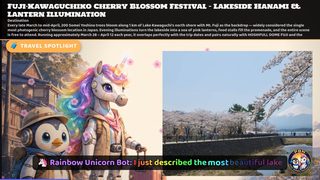 2026-09-18Fuji-Kawaguchiko Cherry Blossom Festival — Lakeside Hanami & Lantern Illumination
Every late March to mid-April, 200 Somei Yoshino trees bloom along 1 km of Lake Kawaguchi's north shore with Mt. Fuji as the backdrop — widely considered the single most photogenic cherry blossom location in Japan. Evening illuminations turn the lakeside into a sea of pink lanterns, food stalls fill the promenade, and the entire scene is free to attend. Running approximately March 28 – April 12 each year, it overlaps perfectly with the trip dates and pairs naturally with HOSHIFULL DOME FUJI and the Chureito Pagoda already on the itinerary.
source → -
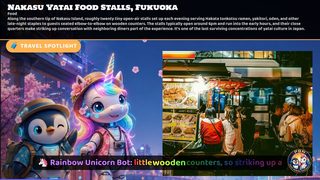 2026-09-17Nakasu Yatai Food Stalls, Fukuoka
Along the southern tip of Nakasu Island, roughly twenty tiny open-air stalls set up each evening serving Hakata tonkotsu ramen, yakitori, oden, and other late-night staples to guests seated elbow-to-elbow on wooden counters. The stalls typically open around 6pm and run into the early hours, and their close quarters make striking up conversation with neighboring diners part of the experience. It's one of the last surviving concentrations of yatai culture in Japan.
source → -
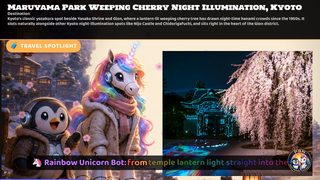 2026-09-16Maruyama Park Weeping Cherry Night Illumination, Kyoto
Kyoto's classic yozakura spot beside Yasaka Shrine and Gion, where a lantern-lit weeping cherry tree has drawn night-time hanami crowds since the 1950s. It slots naturally alongside other Kyoto night-illumination spots like Nijo Castle and Chidorigafuchi, and sits right in the heart of the Gion district.
source → -
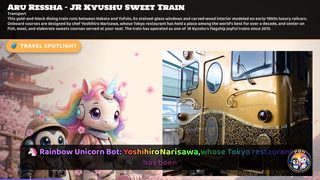 2026-09-15Aru Ressha — JR Kyushu Sweet Train
This gold-and-black dining train runs between Hakata and Yufuin, its stained-glass windows and carved wood interior modeled on early-1900s luxury railcars. Onboard courses are designed by chef Yoshihiro Narisawa, whose Tokyo restaurant has held a place among the world's best for over a decade, and center on fish, meat, and elaborate sweets courses served at your seat. The train has operated as one of JR Kyushu's flagship joyful trains since 2015.
source → -
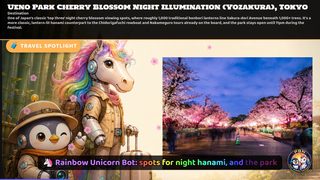 2026-09-14Ueno Park Cherry Blossom Night Illumination (Yozakura), Tokyo
One of Japan's classic 'top three' night cherry blossom viewing spots, where roughly 1,000 traditional bonbori lanterns line Sakura-dori Avenue beneath 1,000+ trees. It's a more classic, lantern-lit hanami counterpart to the Chidorigafuchi rowboat and Nakameguro tours already on the board, and the park stays open until 11pm during the festival.
source → -
 2026-09-13Akihabara Anime & Retro Gaming Night Tour, Tokyo
A small-group evening walk through Tokyo's Electric Town, weaving through neon arcades, retro game shops, figure stores, and a maid café stop with a local guide. It's a natural extension of the Doraemon, Cup Noodles, and Sailor Moon pop-culture stops already on the list, packaged as a single guided night out.
source → -
 2026-09-12Spring Skiing in Hakuba Valley, Nagano
Late-March corn-snow conditions on north-facing runs like Happo-One offer sunny, softened spring skiing in the Japan Alps, a lively, active register distinct from the onsen towns nearby. It's an adrenaline-driven day that also opens up Nagano, a region worth exploring beyond the slopes.
source → -
 2026-09-11Tokaido Shinkansen Private Compartment — Tokyo ↔ Osaka Lockable Cabin for Two
From October 2026, JR Central is introducing fully enclosed, lockable two-person private compartments on the Tokaido Shinkansen — the first private carriages on this line in 23 years — complete with reclining seats, leg rests, adjustable lighting, and dedicated Wi-Fi. For a honeymoon trip moving repeatedly between Tokyo, Hakone, Kyoto, and Osaka, booking one of these cabins turns the 2.5-hour bullet-train leg into its own romantic experience rather than a functional transfer. Availability is initially limited to six refurbished trains, so early booking is essential.
source → -
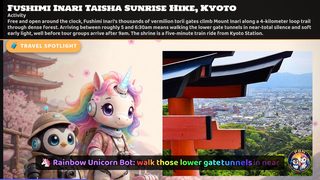 2026-09-10Fushimi Inari Taisha Sunrise Hike, Kyoto
Free and open around the clock, Fushimi Inari's thousands of vermilion torii gates climb Mount Inari along a 4-kilometer loop trail through dense forest. Arriving between roughly 5 and 6:30am means walking the lower gate tunnels in near-total silence and soft early light, well before tour groups arrive after 9am. The shrine is a five-minute train ride from Kyoto Station.
source → -
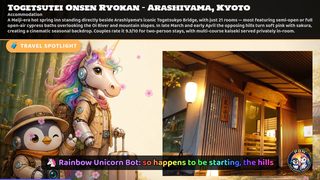 2026-09-09Togetsutei Onsen Ryokan — Arashiyama, Kyoto
A Meiji-era hot spring inn standing directly beside Arashiyama's iconic Togetsukyo Bridge, with just 21 rooms — most featuring semi-open or full open-air cypress baths overlooking the Oi River and mountain slopes. In late March and early April the opposing hills turn soft pink with sakura, creating a cinematic seasonal backdrop. Couples rate it 9.3/10 for two-person stays, with multi-course kaiseki served privately in-room.
source → -
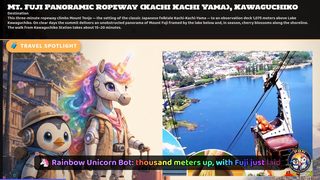 2026-09-08Mt. Fuji Panoramic Ropeway (Kachi Kachi Yama), Kawaguchiko
This three-minute ropeway climbs Mount Tenjo — the setting of the classic Japanese folktale Kachi-Kachi-Yama — to an observation deck 1,075 meters above Lake Kawaguchiko. On clear days the summit delivers an unobstructed panorama of Mount Fuji framed by the lake below and, in season, cherry blossoms along the shoreline. The walk from Kawaguchiko Station takes about 15–20 minutes.
source → -
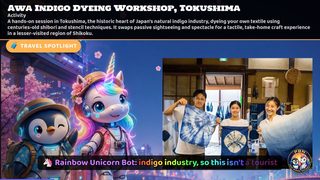 2026-09-07Awa Indigo Dyeing Workshop, Tokushima
A hands-on session in Tokushima, the historic heart of Japan's natural indigo industry, dyeing your own textile using centuries-old shibori and stencil techniques. It swaps passive sightseeing and spectacle for a tactile, take-home craft experience in a lesser-visited region of Shikoku.
source → -
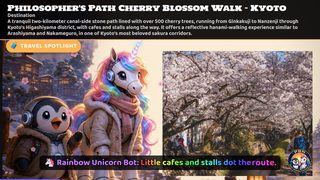 2026-09-06Philosopher's Path Cherry Blossom Walk — Kyoto
A tranquil two-kilometer canal-side stone path lined with over 500 cherry trees, running from Ginkakuji to Nanzenji through Kyoto's Higashiyama district, with cafes and stalls along the way. It offers a reflective hanami-walking experience similar to Arashiyama and Nakameguro, in one of Kyoto's most beloved sakura corridors.
source → -
 2026-09-05Gion Corner Traditional Arts Show, Kyoto
A single-stage sampler of seven Kyoto traditional arts — maiko dance, tea ceremony, koto, bunraku puppetry, and more — performed nightly steps from the Gion Kobu theatre. It's a natural companion to the Miyako Odori and Gion geisha-themed night walk already on the list, giving a compact, English-friendly cultural primer.
source → -
 2026-09-04Jigokudani Snow Monkey Park — Nagano
Wild Japanese macaques soak in their own steaming natural hot spring pools amid snowy mountain forest, reachable via Shinkansen to Nagano followed by a scenic 30-minute forest walk. It's a playful, nature-driven detour that reframes the region's onsen tradition through wildlife rather than luxury lodging.
source → -
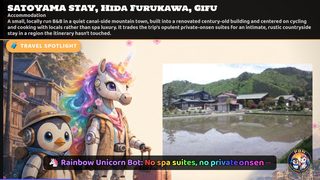 2026-09-03SATOYAMA STAY, Hida Furukawa, Gifu
A small, locally run B&B in a quiet canal-side mountain town, built into a renovated century-old building and centered on cycling and cooking with locals rather than spa luxury. It trades the trip's opulent private-onsen suites for an intimate, rustic countryside stay in a region the itinerary hasn't touched.
source → -
 2026-09-02TRAIN SUITE SHIKI-SHIMA — JR East Luxury Sleeper Train
A Ken Okuyama-designed cruise train with only 17 suites (including a two-story maisonette suite), champagne-gold livery, and glass observation cars, running multi-day routes through Honshu and Hokkaido with off-train excursions included. It's a natural extension of the private Shinkansen cabin and Iyonada Monogatari dining-train ideas already saved, moving from a single scenic leg to a full overnight luxury rail journey.
source → -
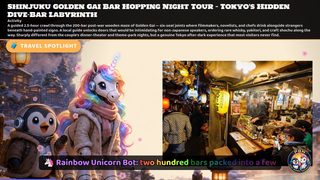 2026-09-01Shinjuku Golden Gai Bar Hopping Night Tour — Tokyo's Hidden Dive-Bar Labyrinth
A guided 2.5-hour crawl through the 200-bar post-war wooden maze of Golden Gai — six-seat joints where filmmakers, novelists, and chefs drink alongside strangers beneath hand-painted signs. A local guide unlocks doors that would be intimidating for non-Japanese speakers, ordering rare whisky, yakitori, and craft shochu along the way. Sharply different from the couple's dinner-theater and theme-park nights, but a genuine Tokyo after-dark experience that most visitors never find.
source → -
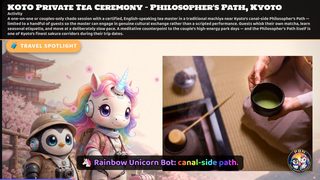 2026-08-31KOTO Private Tea Ceremony — Philosopher's Path, Kyoto
A one-on-one or couples-only chado session with a certified, English-speaking tea master in a traditional machiya near Kyoto's canal-side Philosopher's Path — limited to a handful of guests so the master can engage in genuine cultural exchange rather than a scripted performance. Guests whisk their own matcha, learn seasonal etiquette, and move at a deliberately slow pace. A meditative counterpoint to the couple's high-energy park days — and the Philosopher's Path itself is one of Kyoto's finest sakura corridors during their trip dates.
source → -
 2026-08-30Naruto Whirlpools Sightseeing Boat, Tokushima
Small boats venture close to one of the world's largest tidal whirlpools, where Pacific and Seto Inland Sea currents collide beneath the Onaruto Bridge. It's a short, thrilling nature spectacle rooted in raw ocean power rather than romance or luxury, and pairs naturally with the couple's Shikoku train journey.
source → -
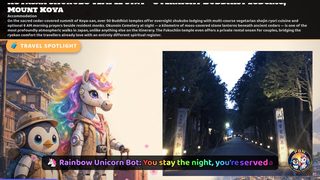 2026-08-29Koyasan Shukubo Temple Stay — Overnight Buddhist Lodging, Mount Koya
On the sacred cedar-covered summit of Koya-san, over 50 Buddhist temples offer overnight shukubo lodging with multi-course vegetarian shojin ryori cuisine and optional 6 AM morning prayers beside resident monks. Okunoin Cemetery at night — a kilometre of moss-covered stone lanterns beneath ancient cedars — is one of the most profoundly atmospheric walks in Japan, unlike anything else on the itinerary. The Fukuchiin temple even offers a private rental onsen for couples, bridging the ryokan comfort the travellers already love with an entirely different spiritual register.
source → -
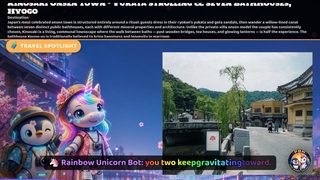 2026-08-28Kinosaki Onsen Town — Yukata Strolling & Seven Bathhouses, Hyogo
Japan's most celebrated onsen town is structured entirely around a ritual: guests dress in their ryokan's yukata and geta sandals, then wander a willow-lined canal between seven distinct public bathhouses, each with different mineral properties and architecture. Unlike the private-villa onsen model the couple has consistently chosen, Kinosaki is a living, communal townscape where the walk between baths — past wooden bridges, tea houses, and glowing lanterns — is half the experience. The bathhouse Kouno-yu is traditionally believed to bring happiness and longevity in marriage.
source → -
 2026-08-27Eizan Railway Kirara Scenic Train — Demachiyanagi to Kurama, Kyoto
The Kirara is Eizan Railway's panoramic sightseeing train on the Kurama Line, its ceiling-high panoramic windows framing tunnel after tunnel of cherry blossoms arching over the hillside track north of Kyoto in late March and early April. No reservation or surcharge required — hop on at Demachiyanagi Station and ride to the mountain-onsen village of Kurama. A romantic, wallet-friendly complement to the Iyonada Monogatari luxury dining train already saved, covering entirely different scenery and geography.
source → -
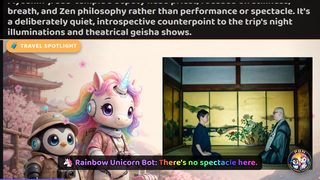 2026-08-26Shunkoin Temple English Zen Meditation & Tea, Kyoto
A 90-minute zazen session and temple tour led in English by a Myoshin-ji sub-temple's deputy head priest, focused on stillness, breath, and Zen philosophy rather than performance or spectacle. It's a deliberately quiet, introspective counterpoint to the trip's night illuminations and theatrical geisha shows.
source → -
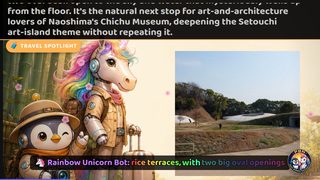 2026-08-25Teshima Art Museum, Setouchi Inland Sea
A short ferry hop from Naoshima, this Ryue Nishizawa and Rei Naito collaboration is a single vast concrete shell over rice terraces, with two oval oculi open to the sky and water that mysteriously wells up from the floor. It's the natural next stop for art-and-architecture lovers of Naoshima's Chichu Museum, deepening the Setouchi art-island theme without repeating it.
source → -
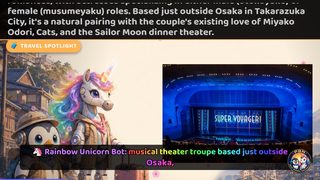 2026-08-24Takarazuka Revue — All-Female Musical Theater, Hyogo
Japan's famed all-female musical theater troupe performs lavish, melodramatic productions ranging from Western classics to original romances, with actresses specializing in either male (otokoyaku) or female (musumeyaku) roles. Based just outside Osaka in Takarazuka City, it's a natural pairing with the couple's existing love of Miyako Odori, Cats, and the Sailor Moon dinner theater.
source → -
 2026-08-23Ise Jingu Grand Shrine & Ama Diver Culture — Ise-Shima, Mie
Japan's most sacred Shinto shrine complex, rebuilt every 20 years in an unbroken tradition dating back centuries, paired with a visit to see the Ama — free-diving women who have harvested pearls and seafood in Ago Bay without oxygen tanks for over 2,000 years. It trades the trip's anime, onsen, and illumination themes for pure spiritual pilgrimage and living maritime folk culture on the coast east of Osaka.
source → -
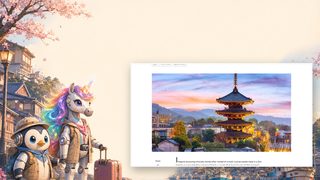 2026-08-22Kyoto Kitcho Kaiseki Dinner — Arashiyama
A three-Michelin-starred kaiseki restaurant founded in 1930 and widely regarded as the pinnacle of Kyoto cuisine, serving meticulously composed seasonal courses in private tatami rooms overlooking immaculate garden landscapes. Every element — lacquerware, ceramics, ingredient sourcing — is curated to reflect the precise moment of the year, and in late March the garden is framed by early sakura. Reservations must be secured weeks to months in advance; the experience is steep in cost but frequently described as a transformative shift in how guests understand Japanese food.
source → -
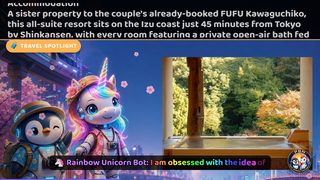 2026-08-21Atami Fufu — Ocean-View Private Open-Air Onsen Suites, Izu Coast
A sister property to the couple's already-booked FUFU Kawaguchiko, this all-suite resort sits on the Izu coast just 45 minutes from Tokyo by Shinkansen, with every room featuring a private open-air bath fed by fresh hot spring water and Pacific Ocean views. It offers the same refined onsen-suite brand experience in a seaside setting rather than a mountain one.
source → -
 2026-08-20Ghibli Park — Studio Ghibli Theme Park, Nagakute (Nagoya)
An immersive, ride-light theme park spread across five atmospheric zones recreating worlds from Totoro, Howl's Moving Castle, and other Studio Ghibli films, with realistic sets and Easter eggs for fans. It fits neatly alongside the couple's existing character-museum picks like the Doraemon Museum, Cup Noodles Museums, and Fuji-Q Highland.
source → -
 2026-08-19Naoshima Art Island — Chichu Art Museum & Tadao Ando Architecture, Setouchi Inland Sea
A former industrial island in the Seto Inland Sea reinvented as a contemporary art destination, where Monet, Walter De Maria, and James Turrell works are housed in a mostly-underground museum designed to be lit only by natural light. It swaps the trip's traditional and pop-culture aesthetics for minimalist modern art and architecture on a quiet, ferry-accessible island.
source → -
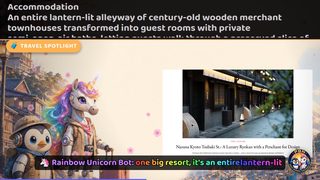 2026-08-18Nazuna Kyoto — Restored 110-Year-Old Machiya Townhouse Inn
An entire lantern-lit alleyway of century-old wooden merchant townhouses transformed into guest rooms with private semi-open-air baths, letting guests walk through a preserved slice of old Kyoto rather than stay in a resort. It trades the trip's grand onsen resorts for an intimate, historic-neighborhood immersion within the city itself.
source → -
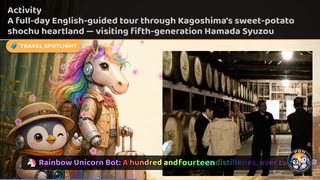 2026-08-17Kagoshima Shochu & Whisky Distillery Tour
A full-day English-guided tour through Kagoshima's sweet-potato shochu heartland — visiting fifth-generation Hamada Syuzou (founded 1868) and sampling honkaku shochu alongside a traditional local lunch. Kagoshima holds 114 distilleries and over 2,000 shochu brands; this tour pairs logically as an extension if Yakushima is added to the itinerary, offering the same immersive-education format the couple enjoys — just with fermentation tanks and tasting glasses instead of pixels.
source → -
 2026-08-16Kyoto Samurai Experience — Authentic Swordsmanship in a Historic Samurai Residence
Held in the former home of an actual samurai who served the Tokugawa Shogunate at Nijo Castle over 260 years ago, this 90-minute session covers iaitō swordsmanship, Zen meditation, and the viewing of blades dating back 650 years — no staging, just the authentic space and its accumulated history. It's a grounded, analogue counterpoint to the teamLab and theme-park circuit, swapping screens for steel and silence. Small group sizes ensure the atmosphere stays genuinely intimate rather than tourist-show.
source → -
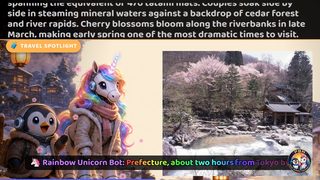 2026-08-15Takaragawa Onsen Osenkaku — Riverside Mixed-Gender Open-Air Hot Springs, Gunma
Deep in the Minakami mountains of Gunma Prefecture (about two hours from Tokyo by shinkansen plus shuttle), this legendary ryokan sits beside the rushing Takaragawa River and features four massive open-air baths — three of which are mixed-gender, a rarity in Japan — spanning the equivalent of 470 tatami mats. Couples soak side by side in steaming mineral waters against a backdrop of cedar forest and river rapids. Cherry blossoms bloom along the riverbanks in late March, making early spring one of the most dramatic times to visit.
source → -
 2026-08-14teamLab: Field of Wind, Rain and Sun — Higashiosaka
A permanent outdoor teamLab installation inside a converted can factory in Higashiosaka, this is the most nature-responsive exhibit in the teamLab universe — light emerges in the sky during strong wind, raindrops crystallise into floating points of light at night, and at noon on clear days a perfect circular rainbow hovers in the air. Access is exclusively via advance-reservation seating at the attached café, with only six visitors per session. It's an intimate, crowd-free alternative to the larger indoor museums — a distinctly different teamLab energy for couples who've already worked through the blockbusters.
source → -
 2026-08-13Kanshundo Wagashi Making Class — Traditional Japanese Confectionery, Kyoto
At one of Kyoto's most respected confectionery houses, guests learn to shape nerikiri (hand-moulded sweet bean paste) into seasonal motifs — cherry blossoms, cranes, spring leaves — using traditional tools, then eat their creations with a bowl of ceremonial matcha. It is hands-on craft and food simultaneously, grounded entirely in Kyoto's pre-modern culture rather than anything digital or pop. A sharp contrast to the couple's screen-and-spectacle pattern, and highly rated on TripAdvisor for its calm, unhurried pace.
source →