-
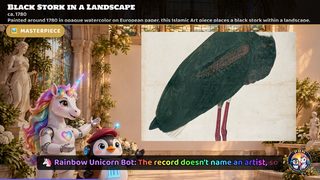 2026-11-24Black Stork in a Landscape
Painted around 1780 in opaque watercolor on European paper, this Islamic Art piece places a black stork within a landscape.
-
 2026-11-20Woman at her dressing table
Leng Mei's early 18th-century hanging scroll, painted in ink and color on silk, invites you to peek at a woman at her dressing table.
-
 2026-11-19Incense burner
This bronze incense burner from ancient West Asia, made around the middle of the first millennium BCE, hints at the fragrant rituals of a distant age.
-
 2026-11-18Bala
Crafted from wood, gourd, hide, and membrane, this 19th-century Malinke bala is a marvelous musical instrument waiting to be played.
-
 2026-11-17"Gould" Violin
Crafted in Cremona, Italy, in 1693, Antonio Stradivari's "Gould" Violin pairs maple, spruce, and ebony into an instrument now preserved in a museum's musical collection.
-
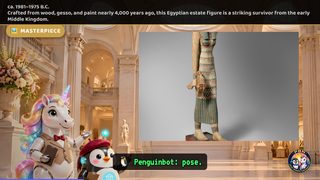 2026-11-16Estate Figure
Crafted from wood, gesso, and paint nearly 4,000 years ago, this Egyptian estate figure is a striking survivor from the early Middle Kingdom.
-
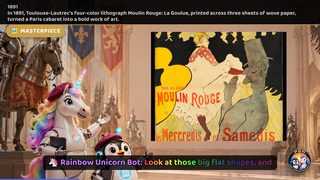 2026-11-15Moulin Rouge: La Goulue
In 1891, Toulouse-Lautrec's four-color lithograph Moulin Rouge: La Goulue, printed across three sheets of wove paper, turned a Paris cabaret into a bold work of art.
-
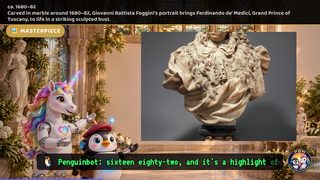 2026-11-14Ferdinando de' Medici, Grand Prince of Tuscany
Carved in marble around 1680–82, Giovanni Battista Foggini's portrait brings Ferdinando de' Medici, Grand Prince of Tuscany, to life in a striking sculpted bust.
-
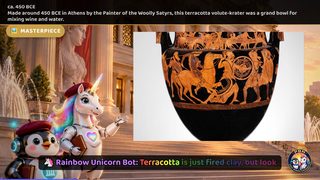 2026-11-13Terracotta volute-krater (bowl for mixing wine and water)
Made around 450 BCE in Athens by the Painter of the Woolly Satyrs, this terracotta volute-krater was a grand bowl for mixing wine and water.
-
 2026-11-10Henri d'Albret (1503–55), King of Navarre
Léonard Limosin's 1556 portrait of Henri d'Albret, King of Navarre, is painted in enamel on copper and partly gilded for a shimmering finish.
-
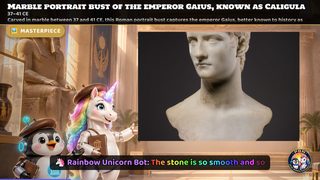 2026-11-09Marble portrait bust of the emperor Gaius, known as Caligula
Carved in marble between 37 and 41 CE, this Roman portrait bust captures the emperor Gaius, better known to history as Caligula.
-
 2026-11-07Ugolino and His Sons
Carpeaux's 1865–67 marble sculpture, carved from Saint-Béat stone, locks Ugolino and his sons into one tangled, emotionally charged group.
-
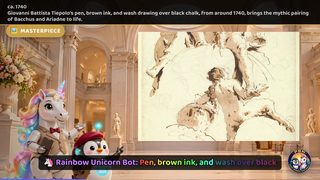 2026-11-06Bacchus and Ariadne
Giovanni Battista Tiepolo's pen, brown ink, and wash drawing over black chalk, from around 1740, brings the mythic pairing of Bacchus and Ariadne to life.
-
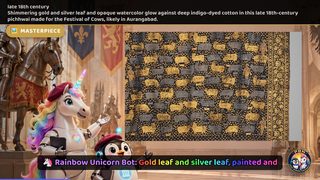 2026-11-05Pichhwai for the Festival of Cows
Shimmering gold and silver leaf and opaque watercolor glow against deep indigo-dyed cotton in this late 18th-century pichhwai made for the Festival of Cows, likely in Aurangabad.
-
 2026-11-04Young Woman with a Water Pitcher
Vermeer's quiet oil-on-canvas scene, painted around 1662, centers on a young woman and her water pitcher, a masterwork now in European Paintings.
-
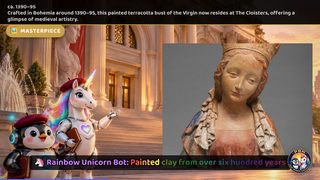 2026-11-03Bust of the Virgin
Crafted in Bohemia around 1390–95, this painted terracotta bust of the Virgin now resides at The Cloisters, offering a glimpse of medieval artistry.
-
 2026-11-01Tree Spirit Deity (Yakshi)
Carved in red sandstone nearly 2,000 years ago in India's Mathura region, this Yakshi tree spirit deity still casts a commanding presence.
-
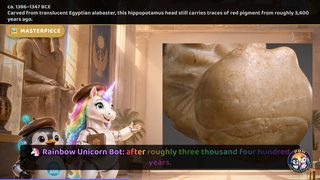 2026-10-31Head of a Hippopotamus
Carved from translucent Egyptian alabaster, this hippopotamus head still carries traces of red pigment from roughly 3,400 years ago.
-
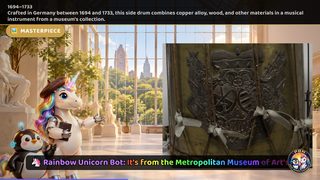 2026-10-30Side Drum
Crafted in Germany between 1694 and 1733, this side drum combines copper alloy, wood, and other materials in a musical instrument from a museum's collection.
-
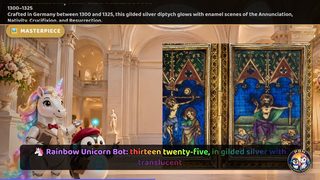 2026-10-29Diptych with Scenes of the Annunciation, Nativity, Crucifixion, and Resurrection
Crafted in Germany between 1300 and 1325, this gilded silver diptych glows with enamel scenes of the Annunciation, Nativity, Crucifixion, and Resurrection.
-
 2026-10-28Shiva as Lord of Dance (Nataraja)
Dancing within a ring of flames, this late 11th-century copper alloy Shiva from Tamil Nadu captures the Lord of Dance in graceful, powerful motion.
-
 2026-10-27Antigraceful
Umberto Boccioni's bronze Antigraceful, dated 1913 and cast in 1950, is a striking piece of modern art whose title promises anything but elegance.
-
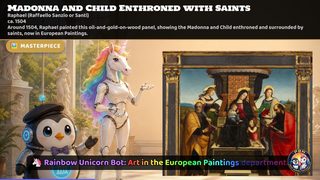 2026-10-25Madonna and Child Enthroned with Saints
Around 1504, Raphael painted this oil-and-gold-on-wood panel, showing the Madonna and Child enthroned and surrounded by saints, now in European Paintings.
-
 2026-10-24Portrait of a Carthusian
In 1446, Petrus Christus painted this Carthusian portrait in oil on oak, a quiet figure preserved in the European Paintings collection.
-
 2026-10-23Hercules chasing Avarice from the Temple of the Muses
Ugo da Carpi's chiaroscuro woodcut, printed from two blocks in green ink, shows Hercules driving Avarice out of the Temple of the Muses around 1520–27.
-
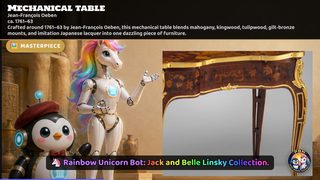 2026-10-22Mechanical table
Crafted around 1761–63 by Jean-François Oeben, this mechanical table blends mahogany, kingwood, tulipwood, gilt-bronze mounts, and imitation Japanese lacquer into one dazzling piece of furniture.
-
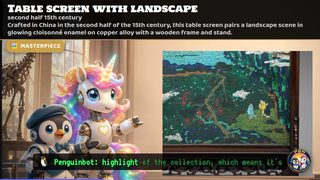 2026-10-21Table screen with landscape
Crafted in China in the second half of the 15th century, this table screen pairs a landscape scene in glowing cloisonné enamel on copper alloy with a wooden frame and stand.
-
 2026-10-20Chasse with the Crucifixion and Christ in Majesty
Glowing gilded copper and vivid champlevé enamel come together in this French reliquary chest from around 1180–90, showing the Crucifixion alongside Christ in Majesty.
-
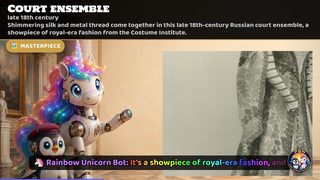 2026-10-16Court ensemble
Shimmering silk and metal thread come together in this late 18th-century Russian court ensemble, a showpiece of royal-era fashion from the Costume Institute.
-
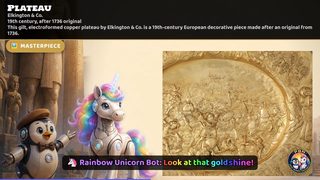 2026-10-13Plateau
This gilt, electroformed copper plateau by Elkington & Co. is a 19th-century European decorative piece made after an original from 1736.
-
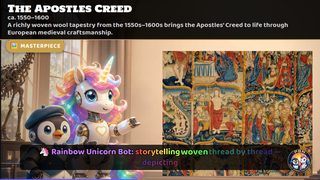 2026-10-12The Apostles Creed
A richly woven wool tapestry from the 1550s–1600s brings the Apostles' Creed to life through European medieval craftsmanship.
-
 2026-10-10Portrait of a Man in Armor with Two Pages
Paris Bordon's oil-on-canvas portrait captures a man in armor flanked by two pages, a European Paintings gallery highlight.
-
 2026-10-09Village Cart (unnumbered)
A colorful mid-1800s lithograph brings a simple village cart scene to life in vivid period detail.
-
 2026-10-08Madonna and Child
Soft golden light and rich detail bring Luca Signorelli's early-1500s oil-and-gold Madonna and Child to life on wood.
-
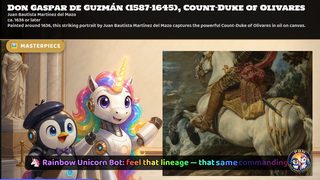 2026-09-30Don Gaspar de Guzmán (1587–1645), Count-Duke of Olivares
Painted around 1636, this striking portrait by Juan Bautista Martínez del Mazo captures the powerful Count-Duke of Olivares in oil on canvas.
-
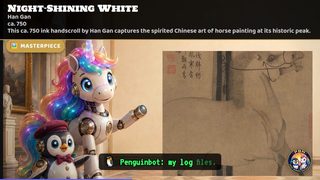 2026-09-26Night-Shining White
This ca. 750 ink handscroll by Han Gan captures the spirited Chinese art of horse painting at its historic peak.
-
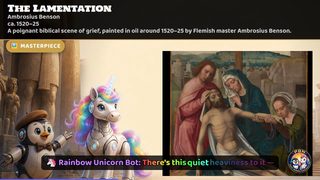 2026-09-25The Lamentation
A poignant biblical scene of grief, painted in oil around 1520–25 by Flemish master Ambrosius Benson.
-
 2026-09-24Stela of the Steward Mentuwoser
Carved around 1944 B.C., this painted limestone stela honors steward Mentuwoser, a striking piece from the Met's Egyptian Art collection.
-
 2026-09-22Anthology of Persian Poetry in Oblong Format (Safina)
Sultan Muhammad Nur crafted this gold-illuminated Persian poetry anthology in 1499–1500, bound in leather in a distinctive oblong format.
-
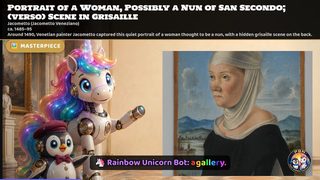 2026-09-19Portrait of a Woman, Possibly a Nun of San Secondo; (verso) Scene in Grisaille
Around 1490, Venetian painter Jacometto captured this quiet portrait of a woman thought to be a nun, with a hidden grisaille scene on the back.
-
 2026-09-18Christ Blessing
Gerard David's serene oil-on-wood painting Christ Blessing, from around 1500 to 1505, showcases exquisite early Netherlandish religious art.
-
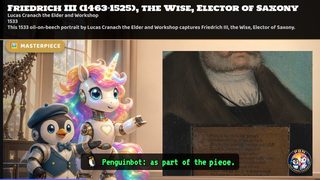 2026-09-17Friedrich III (1463–1525), the Wise, Elector of Saxony
This 1533 oil-on-beech portrait by Lucas Cranach the Elder and Workshop captures Friedrich III, the Wise, Elector of Saxony.
-
 2026-09-14Head of Christ (Ecce Homo)
A tender oil-on-parchment portrait of Christ's suffering, painted by Netherlandish master Petrus Christus around 1445.
-
 2026-09-11Virgin and Child with Four Angels
This serene Gerard David panel of the Virgin and Child with four angels, painted in oil around 1510–15, showcases exquisite Northern Renaissance devotional artistry.
-
 2026-09-09Yuny and His Wife Renenutet
Painted limestone portrait of Yuny and his wife Renenutet brings ancient Egyptian family life vividly to life, dating back over 3,000 years.
-
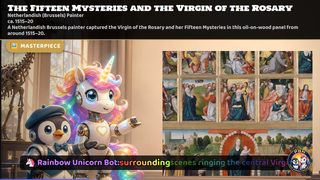 2026-09-07The Fifteen Mysteries and the Virgin of the Rosary
A Netherlandish Brussels painter captured the Virgin of the Rosary and her Fifteen Mysteries in this oil-on-wood panel from around 1515–20.
-
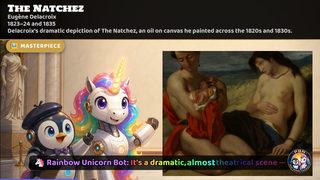 2026-09-05The Natchez
Delacroix's dramatic depiction of The Natchez, an oil on canvas he painted across the 1820s and 1830s.
-
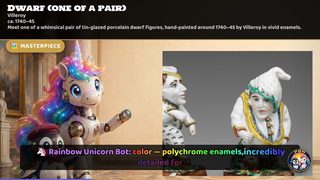 2026-09-04Dwarf (one of a pair)
Meet one of a whimsical pair of tin-glazed porcelain dwarf figures, hand-painted around 1740–45 by Villeroy in vivid enamels.
-
 2026-08-30Saint Anthony the Abbot in the Wilderness
A tender wilderness scene painted around 1440 by Sano di Pietro, blending tempera and gold on wood in the Met's Robert Lehman Collection.
-
 2026-08-28Christ Asleep during the Tempest
Delacroix's turbulent 1853 oil painting captures Christ sleeping through a raging storm, a moment of quiet faith amid chaos.
-
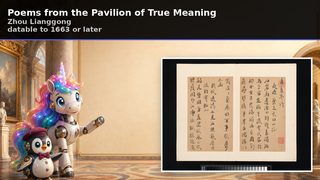 2026-08-22Poems from the Pavilion of True Meaning
-
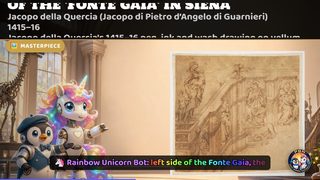 2026-08-21Design Fragment for the Left Side of the 'Fonte Gaia' in Siena
Jacopo della Quercia's 1415–16 pen, ink and wash drawing on vellum captures his design for one side of Siena's famed 'Fonte Gaia' fountain.
-
 2026-08-20One of a Pair of Vases with Dragon Handles
A 19th-century Chinese vase, part of a pair, showcases dragon handles in vibrant cloisonné enamel, gilt bronze, and champlevé work.
-
 2026-08-14Marie Antoinette in a Park
Elisabeth Louise Vigée Le Brun captured the elegance of Marie Antoinette in this intimate chalk drawing, created around 1780–81.