-
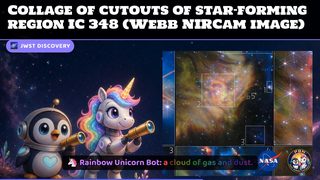 2026-09-18Collage of cutouts of star-forming region IC 348 (Webb NIRCam image)
This collage features a collection of cutouts from the massive star-forming region IC 348. Each of these six panels showcase features of interest that are visible throughout the field. 1: Star embedded in a nebula — This small portion of the field contains two stars deeply embedded in a cloud of gas and dust. The…
source → -
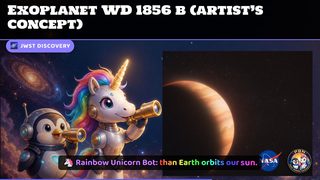 2026-09-14Exoplanet WD 1856 b (artist’s concept)
Exoplanet WD 1856 b, shown in this artist’s concept, is a gas giant that survived the death of its star. It now orbits a white dwarf at a distance 50 times closer than Earth orbits the Sun. Observations by the NASA/ESA/CSA James Webb Space Telescope not only determined the planet’s temperature but also detected…
source → -
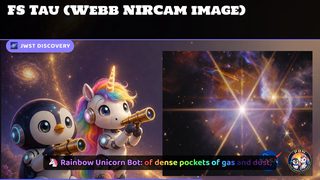 2026-09-13FS Tau (Webb NIRCam image)
The NASA/ESA/CSA James Webb Space Telescope captures the infrared light from bright protostars in the young star system FS Tau. In addition to myriad background galaxies that burst into view, this image flickers with a number of protostars, or baby stars that are formed from dense pockets of gas and dust. These hot…
source → -
 2026-09-12A cosmic construction project
In today’s Picture of the Month from the NASA/ESA/CSA James Webb Space Telescope we are taken on a visit to a building site of significant scale. The project is a galaxy cluster named MACS J0553.4-3342, located in the constellation Columba (the Dove). MACS J0553.4-3342 is situated at a redshift of 0.412. Redshift is a…
source → -
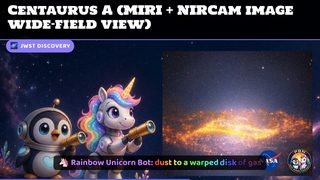 2026-09-11Centaurus A (MIRI + NIRCam image wide-field view)
This combined view of Centaurus A from the NASA/ESA/CSA James Webb Space Telescope pairs observations from the Near-Infrared Camera ( NIRCam ) and Mid-Infrared Instrument ( MIRI ). Webb’s infrared vision exposes a warped disk of gas and dust left behind by a collision with another galaxy billions of years ago. What…
source → -
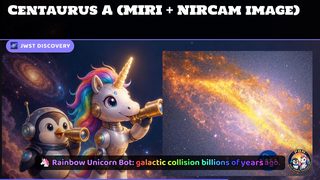 2026-09-09Centaurus A (MIRI + NIRCam image)
This combined view of Centaurus A from the NASA/ESA/CSA James Webb Space Telescope pairs observations from the Near-Infrared Camera ( NIRCam ) and Mid-Infrared Instrument ( MIRI ). Webb’s infrared vision exposes a warped disk of gas and dust left behind by a collision with another galaxy billions of years ago. What…
source → -
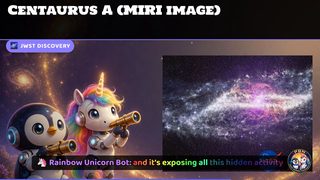 2026-09-08Centaurus A (MIRI image)
The NASA/ESA/CSA James Webb Space Telescope’s Mid-Infrared Instrument ( MIRI ) reveals the nearby galaxy Centaurus A, exposing the dusty structures and hidden activity that shape this unusual system. Webb’s infrared vision pierces thick lanes of dust that obscure much of the galaxy in visible light, unveiling…
source → -
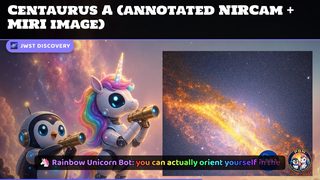 2026-09-07Centaurus A (annotated NIRCam + MIRI image)
Annotated image of the active galaxy Centaurus A captured by the James Webb Space Telescope’s Near-Infrared Camera ( NIRCam ) and Mid-Infrared Instrument ( MIRI ), with compass arrows, a scale bar, and colour key for reference. The north and east compass arrows show the orientation of the image on the sky. Note that…
source → -
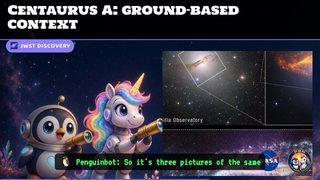 2026-09-06Centaurus A: ground-based context
This ground-based image of nearby galaxy Centaurus A from the European Southern Observatory (top left) puts the near-infrared and mid-infrared views from the NASA/ESA/CSA James Webb Space Telescope image into context. [ Image description : A three-panel comparison shows different views of galaxy Centaurus A. The upper…
source → -
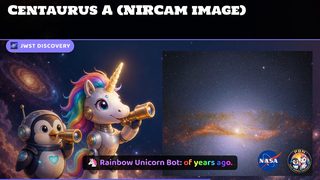 2026-09-05Centaurus A (NIRCam image)
This view of Centaurus A from the NASA/ESA/CSA James Webb Space Telescope if from the Near-Infrared Camera ( NIRCam ) Webb’s infrared vision exposes a warped disk of gas and dust left behind by a collision with another galaxy billions of years ago.
source → -
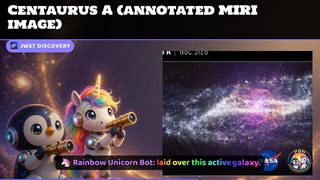 2026-09-04Centaurus A (annotated MIRI image)
Annotated image of the active galaxy Centaurus A captured by the James Webb Space Telescope’s MIRI ( Mid-Infrared Instrument ), with compass arrows, a scale bar, and colour key for reference. The north and east compass arrows show the orientation of the image on the sky. Note that the relationship between north and…
source → -
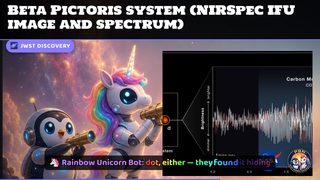 2026-09-02Beta Pictoris system (NIRSpec IFU image and spectrum)
Researchers used the NIRSpec ( Near-Infrared Spectrograph ) Integral Field Unit on the NASA/ESA/CSA James Webb Space Telescope to map chemical contents of the Beta Pictoris system. As a result, they discovered a third planet, Beta Pictoris d, orbiting the young star. Instead of identifying the planet as a bright point…
source → -
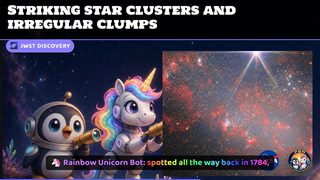 2026-08-29Striking star clusters and irregular clumps
The latest ESA/Webb Picture of the Month is a new, infrared look into the strange final phase of a galactic merger. Arp 263, an irregular galaxy , lies in the constellation Leo at a relatively nearby distance of around 25 million light-years. Originally discovered in 1784 and also catalogued as NGC 3239, this galaxy…
source → -
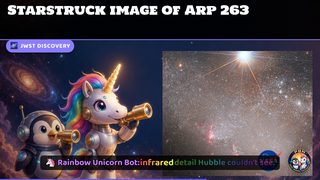 2026-08-28Starstruck image of Arp 263
The latest ESA/Webb Picture of the Month is a new, infrared look into the strange final phase of a galactic merger. Arp 263, an irregular galaxy , lies in the constellation Leo at a relatively nearby distance of around 25 million light-years. This image shows Hubble’s visible-light view of Arp 263, originally released…
source → -
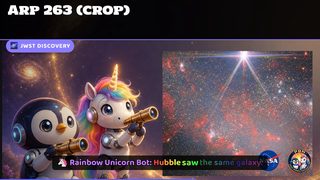 2026-08-27Arp 263 (crop)
The latest ESA/Webb Picture of the Month is a new, infrared look into the strange final phase of a galactic merger. Arp 263, an irregular galaxy , lies in the constellation Leo at a relatively nearby distance of around 25 million light-years. This version of the image is adjusted for comparison with Hubble’s view of…
source → -
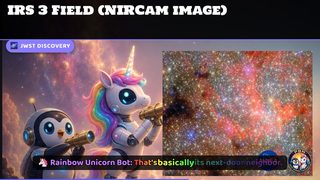 2026-08-23IRS 3 Field (NIRCam image)
This image features data from Webb’s NIRCam ( Near Infrared Camera ) to capture the most detailed mid-infrared view yet of the field that hosts the highly evolved star IRS 3, which is located just 0.55 light-years from Sagittarius A*, the Milky Way galaxy's central supermassive black hole. An international team of…
source → -
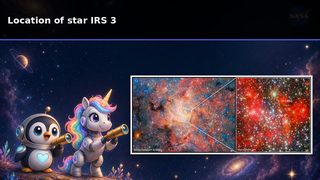 2026-08-22Location of star IRS 3
This image showcases the location of the highly evolved star IRS 3, which is located just 0.55 light-years from Sagittarius A*, the Milky Way galaxy's central supermassive black hole. An international team of astronomers have discovered that dust and water can form and survive surprisingly close to this supermassive…
source → -
 2026-08-21Location of star IRS 3
This image showcases the location of the highly evolved star IRS 3, which is located just 0.55 light-years from Sagittarius A*, the Milky Way galaxy's central supermassive black hole. The images show a progressinvely closer view of the region using ground- and space-based data. An international team of astronomers…
source → -
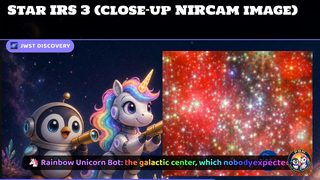 2026-08-19Star IRS 3 (close-up NIRCam image)
This image shows a close-up of the surrounding region of the highly evolved star IRS 3, which is located just 0.55 light-years from Sagittarius A*, the Milky Way galaxy's central supermassive black hole. An international team of astronomers have discovered that dust and water can form and survive surprisingly close to…
source → -
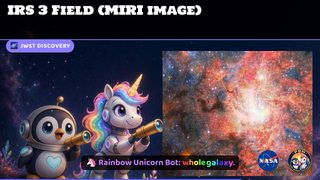 2026-08-18IRS 3 Field (MIRI image)
This image features data from Webb’s MIRI ( Mid Infrared Instrument ) to capture the most detailed mid-infrared view yet of the field that hosts the highly evolved star IRS 3, which is located just 0.55 light-years from Sagittarius A*, the Milky Way galaxy's central supermassive black hole. An international team of…
source → -
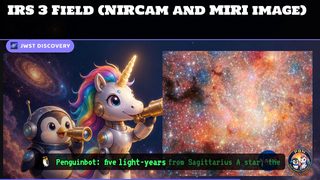 2026-08-17IRS 3 Field (NIRCam and MIRI image)
This image features data from Webb’s NIRCam ( Near Infrared Camera ) and MIRI ( Mid Infrared Instrument ) to capture the most detailed mid-infrared view yet of the field that hosts the highly evolved star IRS 3, which is located just 0.55 light-years from Sagittarius A*, the Milky Way galaxy's central supermassive…
source →