-
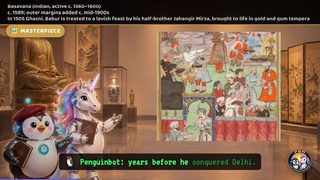 2026-11-23A feast for Babur hosted by his half-brother Jahangir Mirza in Ghazni in May 1505, from a Babur-nama (Memoirs of Babur)
In 1505 Ghazni, Babur is treated to a lavish feast by his half-brother Jahangir Mirza, brought to life in gold and gum tempera by Mughal artist Basavana around 1589.
source → -
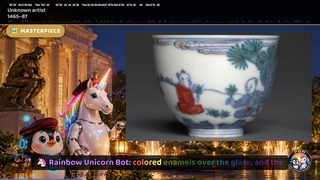 2026-11-22Wine Cup with Children at Play
Tiny children at play are painted in vivid joined colors on this delicate porcelain wine cup, made in Jingdezhen during China's Ming dynasty, 1465–87.
source → -
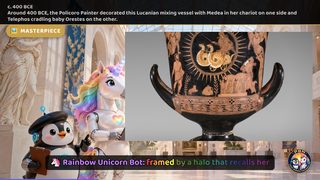 2026-11-21Red-Figure Calyx-Krater (Mixing Vessel): Medea in Chariot (A); Telephos with Baby Orestes (B)
Around 400 BCE, the Policoro Painter decorated this Lucanian mixing vessel with Medea in her chariot on one side and Telephos cradling baby Orestes on the other.
source → -
 2026-11-20Mountain Market, Clear with Rising Mist
Painted in ink on silk in early Joseon-dynasty Korea, this hanging scroll captures a bustling mountain market as mist begins to rise under clearing skies.
source → -
 2026-11-18The Holy Family on the Steps
Nicolas Poussin's 1648 oil painting, "The Holy Family on the Steps," is a masterwork of French European painting that brings sacred figures to life on canvas.
source → -
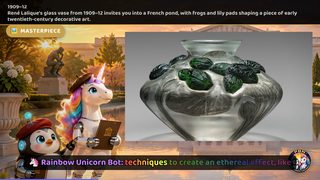 2026-11-17Frogs and Lily Pads (Grenouilles et Nénuphars) Vase
René Lalique's glass vase from 1909–12 invites you into a French pond, with frogs and lily pads shaping a piece of early twentieth-century decorative art.
source → -
 2026-11-16Paulownias and Chrysanthemums
Sakai Hōitsu's early-1800s two-panel folding screen sets paulownias and chrysanthemums in ink and color against shimmering gilded paper, a hallmark of Japan's Edo period.
source → -
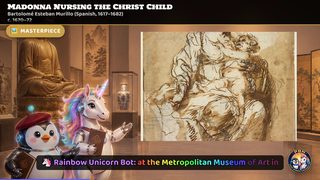 2026-11-13Madonna Nursing the Christ Child
Murillo's tender drawing from around 1670–72 shows the Madonna nursing the Christ Child, built from brown ink and wash over red and black chalk.
source → -
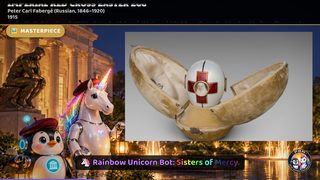 2026-11-12Imperial Red Cross Easter Egg
Crafted in St. Petersburg in 1915 by Peter Carl Fabergé, this Imperial Red Cross Easter Egg blends gold, silver gilt, enamel, glass, and ivory into one dazzling treasure.
source → -
 2026-11-11A Royal Picnic on a Terrace
Step onto a sunlit terrace in Mughal India, where Muhammad Ali's gold-touched painting from around 1620 invites us to a royal picnic at court.
source → -
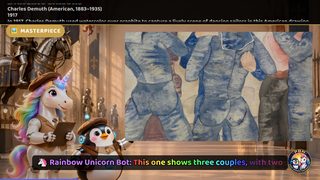 2026-11-10Dancing Sailors
In 1917, Charles Demuth used watercolor over graphite to capture a lively scene of dancing sailors in this American drawing.
source → -
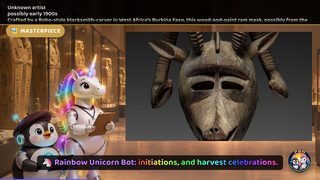 2026-11-09Ram Mask (Bolo)
Crafted by a Bobo-style blacksmith-carver in West Africa's Burkina Faso, this wood-and-paint ram mask, possibly from the early 1900s, brings bold sculptural presence to African art.
source → -
 2026-11-08Church Bells Ringing, Rainy Winter Night
Charles Burchfield's December 1917 watercolor and gouache paints a rainy winter night as church bells ring out across the scene.
source → -
 2026-11-06Invocation to Love
Fragonard's "Invocation to Love," made around 1781, is a French drawing in brown wash over graphite underdrawing, with squaring lines still visible on cream laid paper.
source → -
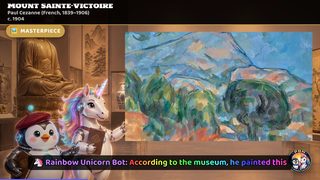 2026-11-05Mount Sainte-Victoire
Cézanne's oil-on-fabric view of Mount Sainte-Victoire, painted around 1904, shows a French master turning a landscape into a bold, modern work.
source → -
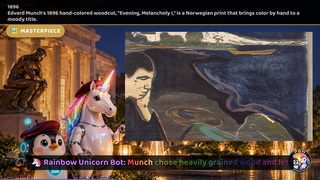 2026-11-04Evening, Melancholy I
Edvard Munch's 1896 hand-colored woodcut, "Evening, Melancholy I," is a Norwegian print that brings color by hand to a moody title.
source → -
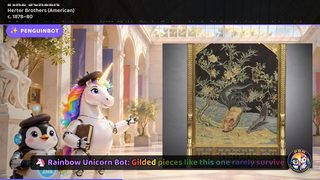 2026-11-02Fire Screen
Crafted by the Herter Brothers around 1878–80, this glittering Fire Screen blends gilded wood, painted panels, brocaded silk, and embossed paper into one lavish piece of American design.
source → -
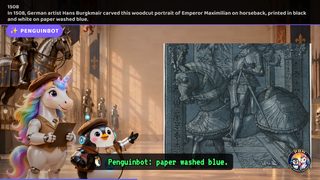 2026-10-30Equestrian Portrait of the Emperor Maximilian
In 1508, German artist Hans Burgkmair carved this woodcut portrait of Emperor Maximilian on horseback, printed in black and white on paper washed blue.
source → -
 2026-10-25Sir Anthony Mildmay, Knight of Apethorpe, Northamptonshire
Nicholas Hilliard painted this tiny watercolor portrait of Sir Anthony Mildmay, Knight of Apethorpe, Northamptonshire, on vellum in England around 1590–93.
source → -
 2026-10-23Battle of the Nudes
Antonio del Pollaiuolo's Italian engraving from the 1470s–80s, Battle of the Nudes, is a landmark work in the Prints collection.
source → -
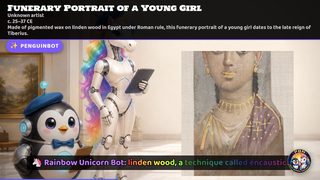 2026-10-22Funerary Portrait of a Young Girl
Made of pigmented wax on linden wood in Egypt under Roman rule, this funerary portrait of a young girl dates to the late reign of Tiberius.
source → -
 2026-10-16Hilt from a Court Sword
Glittering faceted steel beads stud this polished, pierced sword hilt from late 18th-century England, a dazzling accessory made for the refined world of court dress.
source → -
 2026-10-15King Muchukunda Enters the Realm of Mount Gandhamadana to Attain Salvation, from the “Fifth Basohli Bhagavata Purana”
Painted by Fattu around 1760–70 in gum tempera, ink, and gold on paper, this Pahari scene follows King Muchukunda into Mount Gandhamadana's realm to attain salvation.
source → -
 2026-10-12Dance of Death: Death the Strangler
A chilling 1850 German woodcut by Alfred Rethel imagines Death as a strangler, part of his haunting Dance of Death series.
source → -
 2026-10-10Rondache (Round Shield)
This etched and gilded steel Milanese rondache from around 1570 shows off the dazzling craftsmanship of Italian Renaissance armor making.
source → -
 2026-10-09A Party Picnicking Near a Village
A party of 18th-century French revelers picnics near a village in this delicate c. 1760–70 gouache by Louis Nicolas van Blarenberghe.
source → -
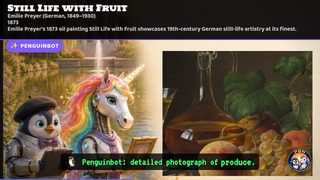 2026-10-07Still Life with Fruit
Emilie Preyer's 1873 oil painting Still Life with Fruit showcases 19th-century German still-life artistry at its finest.
source → -
 2026-10-06Horse-Shaped Drinking Vessel
This gleaming silver-and-gilt horse-shaped drinking vessel dates back nearly 1,800 years to Iran's ancient Sasanian Empire.
source → -
 2026-10-05The Crucifixion with a Carthusian Monk
Rogier van der Weyden's 1460 oil-and-gold panel blends sacred devotion and intimate portraiture, showing the Crucifixion alongside a kneeling Carthusian monk.
source → -
 2026-10-02Baptism of Christ
Alessandro Algardi's striking 17th-century bronze masterwork captures the Baptism of Christ, cast in Italy around 1650–55.
source → -
 2026-09-30Chintz Bed Cover or Hanging with a Japanese-inspired Pattern, Right Half
This early 18th-century Coromandel Coast chintz bed cover blends hand-drawn resist dyeing with a striking Japanese-inspired design.
source → -
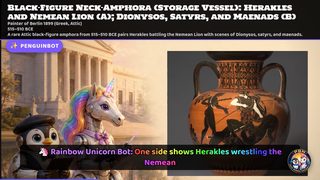 2026-09-29Black-Figure Neck-Amphora (Storage Vessel): Herakles and Nemean Lion (A); Dionysos, Satyrs, and Maenads (B)
A rare Attic black-figure amphora from 515–510 BCE pairs Herakles battling the Nemean Lion with scenes of Dionysos, satyrs, and maenads.
source → -
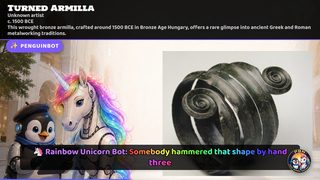 2026-09-25Turned Armilla
This wrought bronze armilla, crafted around 1500 BCE in Bronze Age Hungary, offers a rare glimpse into ancient Greek and Roman metalworking traditions.
source → -
 2026-09-18Miniature from a Manuscript of the Apocalypse: The Woman upon the Scarlet Beast
A gold-lit vellum miniature from a c. 1295 French Apocalypse manuscript brings the Woman upon the Scarlet Beast to vivid medieval life.
source → -
 2026-09-13Fire-flame Cooking Vessel (Ka'en Doki)
This hand-carved earthenware cooking vessel dates back roughly 4,500 years to Japan's ancient Jōmon period.
source → -
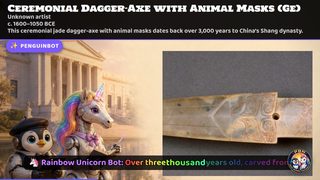 2026-09-11Ceremonial Dagger-Axe with Animal Masks (Ge)
This ceremonial jade dagger-axe with animal masks dates back over 3,000 years to China's Shang dynasty.
source → -
 2026-09-06Feast Ladle
Carved from horn, bone, and copper with abalone shell inlay, this Tlingit feast ladle showcases Northwest Coast Alaskan craftsmanship from the late 1800s to early 1900s.
source → -
 2026-09-05Leaping Trout
Winslow Homer's 1889 watercolor "Leaping Trout" captures a fish mid-jump in delicate graphite and watercolor, part of the Drawings collection.
source → -
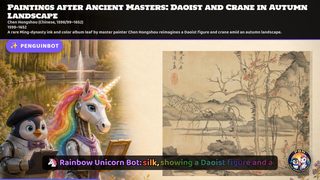 2026-09-04Paintings after Ancient Masters: Daoist and Crane in Autumn Landscape
A rare Ming-dynasty ink and color album leaf by master painter Chen Hongshou reimagines a Daoist figure and crane amid an autumn landscape.
source → -
 2026-09-02Red-Figure Cow-Head Rhyton (Drinking Horn): Seated Woman
This Apulian red-figure ceramic rhyton, shaped like a cow's head and painted with a seated woman, dates back to around 340 BCE.
source → -
 2026-08-28Arc-shaped Pendant with Animal Mask and Interlaced Animal Bands (Huang)
This ancient Chinese jade pendant, carved with an animal mask and interlaced bands, dates back over 2,000 years to the Warring States or Western Han period.
source → -
 2026-08-26Cosmetic Jar in the Form of the God Bes
This 6th-century BCE Egyptian jar holds cosmetics in the whimsical shape of Bes, crafted from vivid Egyptian blue.
source → -
 2026-08-24The Trinity
In Hendrik van Balen's early-1600s Flemish panel painting, the artist brings The Trinity to life in rich oil on wood.
source → -

-
 2026-08-21Adoration of the Shepherds
Hans Leonhard Schäufelein's oil-on-wood "Adoration of the Shepherds," created in Germany around 1510, graces the Medieval Art collection.
source → -
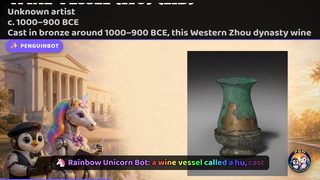 2026-08-19Wine Vessel (Hu) (lid)
Cast in bronze around 1000–900 BCE, this Western Zhou dynasty wine vessel lid reflects ancient China's ceremonial craftsmanship.
source → -
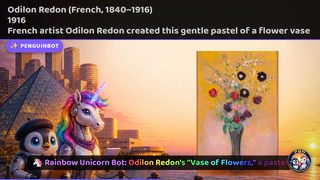 2026-08-17Vase of Flowers
French artist Odilon Redon created this gentle pastel of a flower vase in 1916, now part of the museum's Drawings collection.
source → -
 2026-08-16Eros, the God of Love
This Roman marble sculpture of Eros, the god of love, was crafted by an unknown artist in Italy between 1 and 100 CE.
source → -
 2026-08-15Mosaic of Tigress and Cubs
Created in the 300s CE by an unknown artist of the Eastern Roman Empire, this stunning tesserae mosaic captures a powerful tigress alongside her cubs.
source → -
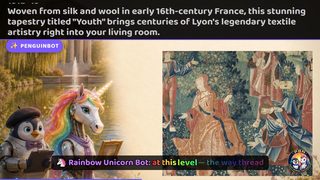 2026-08-14Youth (from Chateau de Chaumont set)
Woven from silk and wool in early 16th-century France, this stunning tapestry titled "Youth" brings centuries of Lyon's legendary textile artistry right into your living room.
source →