-
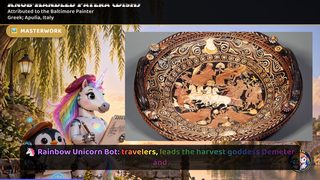 2026-11-21Knob-Handled Patera (Dish)
Crafted in southern Italy around 330–320 BCE, this red-figure terracotta dish with a knob handle is attributed to the Baltimore Painter of Apulia.
-
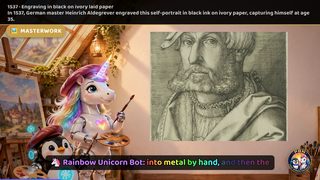 2026-11-20Heinrich Aldegrever, Aged 35
In 1537, German master Heinrich Aldegrever engraved this self-portrait in black ink on ivory paper, capturing himself at age 35.
-
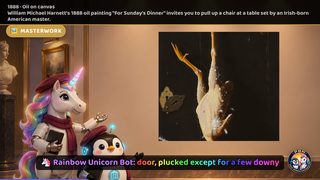 2026-11-14For Sunday's Dinner
William Michael Harnett's 1888 oil painting "For Sunday's Dinner" invites you to pull up a chair at a table set by an Irish-born American master.
-
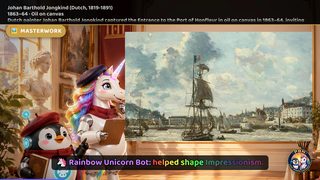 2026-11-13Entrance to the Port of Honfleur
Dutch painter Johan Barthold Jongkind captured the Entrance to the Port of Honfleur in oil on canvas in 1863–64, inviting you into a European harbor scene.
-
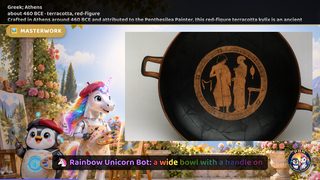 2026-11-11Kylix (Drinking Cup)
Crafted in Athens around 460 BCE and attributed to the Penthesilea Painter, this red-figure terracotta kylix is an ancient Greek cup made for drinking.
-
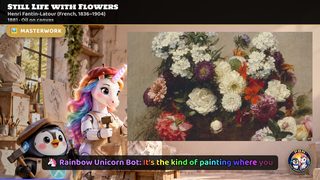 2026-11-08Still Life with Flowers
Henri Fantin-Latour's 1881 oil-on-canvas still life of flowers shows how this French painter turned a simple arrangement of blooms into a work of European painting.
-
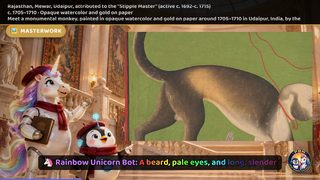 2026-11-07A Monumental Portrait of a Monkey
Meet a monumental monkey, painted in opaque watercolor and gold on paper around 1705–1710 in Udaipur, India, by the artist known as the Stipple Master.
-
 2026-11-06Old Man with a Gold Chain
Painted in 1631 by Dutch master Rembrandt van Rijn, this oil-on-panel portrait gives us a closely observed look at an old man wearing a gold chain.
-
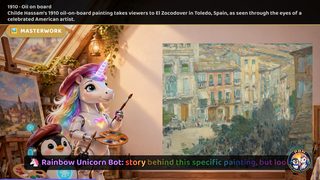 2026-11-03El Zocodover, Toledo, Spain
Childe Hassam's 1910 oil-on-board painting takes viewers to El Zocodover in Toledo, Spain, as seen through the eyes of a celebrated American artist.
-
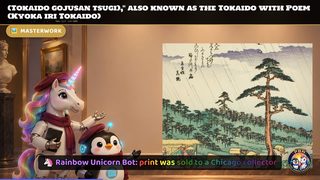 2026-11-02Futakawa, from the series "Fifty-three Stations of the Tokaido (Tokaido gojusan tsugi)," also known as the Tokaido with Poem (Kyoka iri Tokaido)
Hiroshige's color woodblock print "Futakawa," from his Tokaido series, captures a stop along Japan's famed road in rich color, created around 1837 to 1842.
-
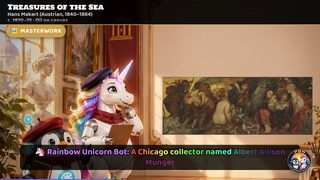 2026-10-31Treasures of the Sea
Austrian painter Hans Makart's oil-on-canvas "Treasures of the Sea," painted around 1870 to 1875, invites you to dive into a European painting of ocean riches.
-
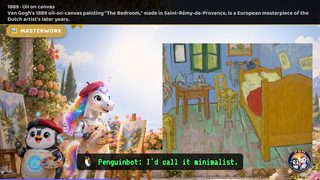 2026-10-30The Bedroom
Van Gogh's 1889 oil-on-canvas painting "The Bedroom," made in Saint-Rémy-de-Provence, is a European masterpiece of the Dutch artist's later years.
-
 2026-10-29A30: Georgia Double Parlor, c. 1850
Designed by Narcissa Niblack Thorne, this miniature Georgia double parlor, set in the style of about 1850, shows a whole room shrunk down to dollhouse size.
-
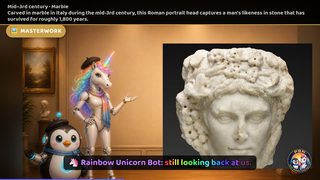 2026-10-28Portrait Head of a Man
Carved in marble in Italy during the mid-3rd century, this Roman portrait head captures a man's likeness in stone that has survived for roughly 1,800 years.
-
 2026-10-26The Courtesan Arihara of the Tsuruya, and Child Attendants Aoe and Sekiya (Tsuruya uchi Arihara, Aoe, Sekiya), from an untitled series of courtesans
Kitagawa Utamaro's colorful woodblock print from around 1797 presents the courtesan Arihara of the Tsuruya alongside her two child attendants, Aoe and Sekiya.
-
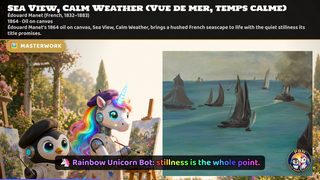 2026-10-24Sea View, Calm Weather (Vue de mer, temps calme)
Édouard Manet's 1864 oil on canvas, Sea View, Calm Weather, brings a hushed French seascape to life with the quiet stillness its title promises.
-
 2026-10-23Still Life with Ostrich Egg Cup and the Whitfield Heirlooms
Painted around 1670 by Dutch artist Pieter Gerritsz. van Roestraeten, this oil-on-canvas still life pairs an ostrich egg cup with the Whitfield heirlooms.
-
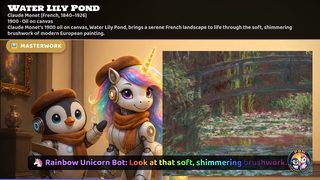 2026-10-20Water Lily Pond
Claude Monet's 1900 oil on canvas, Water Lily Pond, brings a serene French landscape to life through the soft, shimmering brushwork of modern European painting.
-
 2026-10-19Ryogoku Bridge and the Great Riverbank (Ryogokubashi Okawabata), from the series "One Hundred Famous Views of Edo (Meisho Edo hyakkei)"
Utagawa Hiroshige's 1856 color woodblock print, from his "One Hundred Famous Views of Edo" series, shows Ryogoku Bridge and the great riverbank in Japan.
-
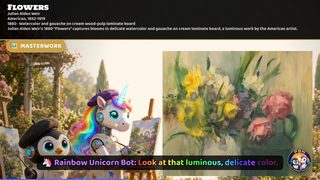 2026-10-18Flowers
Julian Alden Weir's 1880 "Flowers" captures blooms in delicate watercolor and gouache on cream laminate board, a luminous work by the American artist.
-
 2026-10-16A Landsknecht
A drawing in brush, black ink and brown wash over black chalk, this portrait of a Landsknecht is attributed to an unknown artist, possibly Swiss, from the 17th century.
-
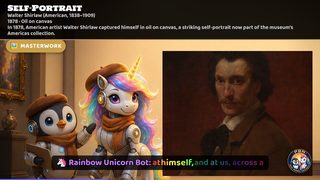 2026-10-09Self-Portrait
In 1878, American artist Walter Shirlaw captured himself in oil on canvas, a striking self-portrait now part of the museum's Americas collection.
-
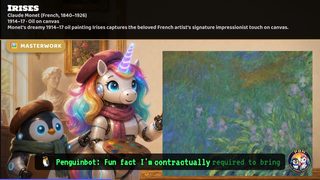 2026-10-06Irises
Monet's dreamy 1914–17 oil painting Irises captures the beloved French artist's signature impressionist touch on canvas.
-
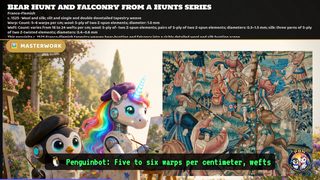 2026-10-04Bear Hunt and Falconry from a Hunts series
This exquisite c. 1525 Franco-Flemish tapestry weaves bear-hunting and falconry into a richly detailed wool and silk hunting scene.
-
 2026-10-03The Hanged Monk
Goya's shadowy 1810 oil panel of a hanged monk captures the Spanish master's haunting vision of death and the macabre.
-
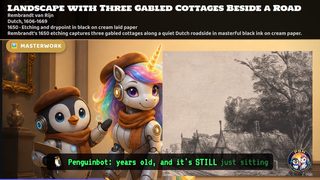 2026-10-02Landscape with Three Gabled Cottages Beside a Road
Rembrandt's 1650 etching captures three gabled cottages along a quiet Dutch roadside in masterful black ink on cream paper.
-
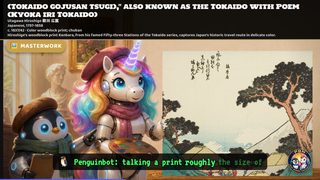 2026-09-28Kanbara, from the series "Fifty-three Stations of the Tokaido (Tokaido gojusan tsugi)," also known as the Tokaido with Poem (Kyoka iri Tokaido)
Hiroshige's woodblock print Kanbara, from his famed Fifty-three Stations of the Tokaido series, captures Japan's historic travel route in delicate color.
-
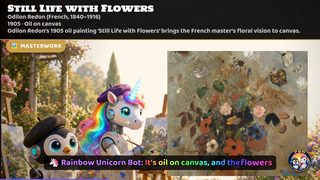 2026-09-27Still Life with Flowers
Odilon Redon's 1905 oil painting 'Still Life with Flowers' brings the French master's floral vision to canvas.
-
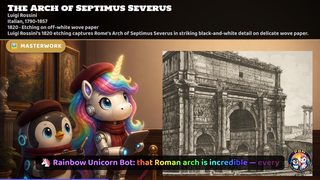 2026-09-25The Arch of Septimus Severus
Luigi Rossini's 1820 etching captures Rome's Arch of Septimus Severus in striking black-and-white detail on delicate wove paper.
-
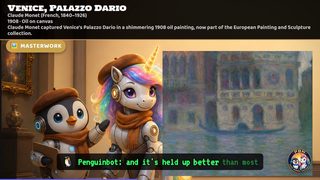 2026-09-22Venice, Palazzo Dario
Claude Monet captured Venice's Palazzo Dario in a shimmering 1908 oil painting, now part of the European Painting and Sculpture collection.
-
 2026-09-21Hamamatsu, from the series "Fifty-three Stations of the Tokaido (Tokaido gojusan tsugi)," also known as the Tokaido with Poem (Kyoka iri Tokaido)
Hiroshige's 1830s woodblock print captures Hamamatsu station, part of his famed Fifty-three Stations of the Tokaido series.
-
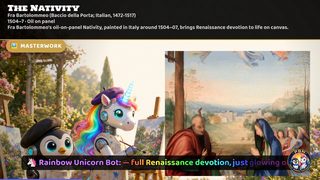 2026-09-18The Nativity
Fra Bartolommeo's oil-on-panel Nativity, painted in Italy around 1504–07, brings Renaissance devotion to life on canvas.
-
 2026-09-14Ishibei, from the series "Fifty-three Stations of the Tokaido (Tokaido gojusan tsugi)"
Hokusai's c.1806 woodblock print Ishibei captures a quiet moment from his famed Tokaido road series in Japan.
-
 2026-09-13The Death of Orpheus
This 1870 oil painting by French artist Henri Leopold Lévy dramatically portrays the death of Orpheus, the legendary musician of Greek mythology.
-
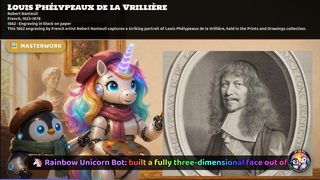 2026-09-11Louis Phélypeaux de la Vrillière
This 1662 engraving by French artist Robert Nanteuil captures a striking portrait of Louis Phélypeaux de la Vrillière, held in the Prints and Drawings collection.
-
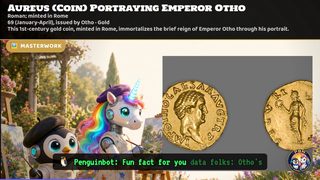 2026-09-09Aureus (Coin) Portraying Emperor Otho
This 1st-century gold coin, minted in Rome, immortalizes the brief reign of Emperor Otho through his portrait.
-
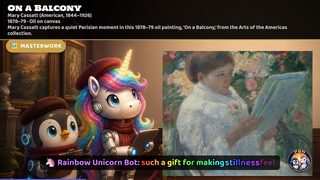 2026-09-08On a Balcony
Mary Cassatt captures a quiet Parisian moment in this 1878–79 oil painting, 'On a Balcony,' from the Arts of the Americas collection.
-
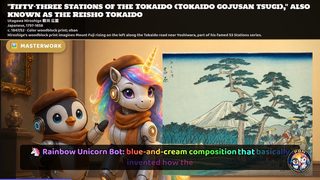 2026-09-07Yoshiwara: The Famous Sight of Mount Fuji on the Left (Yoshiwara, meisho hidari Fuji)—No. 15, from the series "Fifty-three Stations of the Tokaido (Tokaido gojusan tsugi)," also known as the Reisho Tokaido
Hiroshige's woodblock print imagines Mount Fuji rising on the left along the Tokaido road near Yoshiwara, part of his famed 53 Stations series.
-
 2026-09-06Qabqabs (Bath Clogs)
Handcarved in mid-19th-century Algeria, these wooden bath clogs shimmer with delicate mother-of-pearl inlay.
-
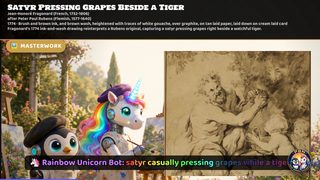 2026-09-04Satyr Pressing Grapes Beside a Tiger
Fragonard's 1774 ink-and-wash drawing reinterprets a Rubens original, capturing a satyr pressing grapes right beside a watchful tiger.
-
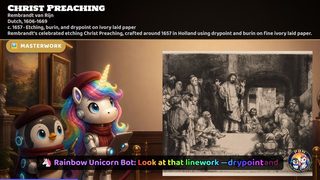 2026-08-28Christ Preaching
Rembrandt's celebrated etching Christ Preaching, crafted around 1657 in Holland using drypoint and burin on fine ivory laid paper.
-
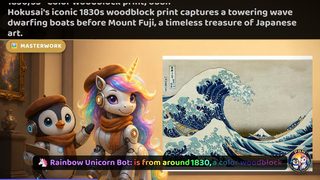 2026-08-24Under the Wave off Kanagawa (Kanagawa oki nami ura), also known as The Great Wave, from the series "Thirty-Six Views of Mount Fuji (Fugaku sanjūrokkei)"
Hokusai's iconic 1830s woodblock print captures a towering wave dwarfing boats before Mount Fuji, a timeless treasure of Japanese art.
-
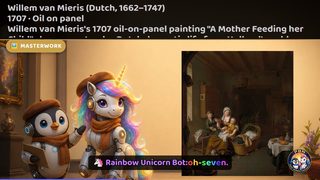 2026-08-21A Mother Feeding her Child (The Happy Mother)
Willem van Mieris's 1707 oil-on-panel painting "A Mother Feeding her Child" showcases tender Dutch domestic life from Holland's golden age.
-
 2026-08-17Ono no Komachi Washing the Copybook (Soshiarai Komachi), from the series The Seven Ukiyo-e Aspects of Komachi (Ukiyo-e nana Komachi)
Torii Kiyonaga's charming 1779 color woodblock print reimagines poet Ono no Komachi washing a copybook, part of a witty ukiyo-e series from Edo-period Japan.
-
 2026-08-16Amphora (Storage Jar)
This stunning Greek terracotta storage jar, crafted in Athens using the black-figure technique between 490 and 480 BCE, is a remarkable survivor of ancient everyday life.
-
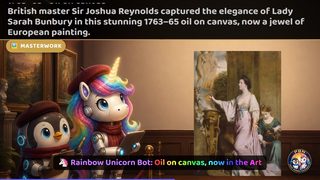 2026-08-15Lady Sarah Bunbury Sacrificing to the Graces
British master Sir Joshua Reynolds captured the elegance of Lady Sarah Bunbury in this stunning 1763–65 oil on canvas, now a jewel of European painting.
-
 2026-08-14Daniel Mytens
This striking Flemish engraving by Paul Pontius, made after Anthony van Dyck between 1630 and 1645, brings the portrait of Daniel Mytens to vivid life in black ink on cream paper.
-
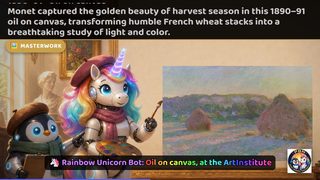 2026-08-13Stacks of Wheat (End of Summer)
Monet captured the golden beauty of harvest season in this 1890–91 oil on canvas, transforming humble French wheat stacks into a breathtaking study of light and color.